


אנשים השתמשו בצינורות במשך אלפי שנים. אולי השימוש הראשון היה על ידי חקלאים קדומים שהסיטו מים מנחלים ונהרות לשדותיהם. עדויות ארכיאולוגיות מראות כי הסינים השתמשו בצינור ריד כדי להעביר מים למקומות מבוקשים כבר ב 2000 0010010 nbsp;B.C. & nbsp;Clay tubes that were used by other ancient civilizations have been discovered. During the first century & nbsp;A.D. & nbsp;, the first lead pipes were constructed in Europe. In tropical countries, bamboo tubes were used to transport water. Colonial Americans used wood for a similar purpose. In 1652, the first waterworks was made in Boston using hollow logs.
Development of the modern day welded steel pipe can be traced back to the early 1800s. In 1815, William Murdock invented a coal burning lamp system. To fit the entire city of London with these lights, Murdock joined together the barrels from discarded muskets. He used this continuous pipeline to transport the coal gas. When his lighting system proved successful a greater demand was created for long metal tubes. To produce enough tubes to meet this demand, a variety of inventors set to work on developing new pipe making processes.
An early notable method for producing metal tubes quickly and inexpensively was patented by James Russell in 1824. In his method, tubes were created by joining together opposite edges of a flat iron strip. The metal was first heated until it was malleable. Using a drop hammer, the edges folded together and welded. The pipe was finished by passing it through a groove and rolling mill.
שיטת ראסל & # 39; לא הייתה בשימוש זמן רב מכיוון שבשנה שלאחר מכן פיתחה קומליוס ווייטהאוס שיטה טובה יותר לייצור צינורות מתכת. תהליך זה, המכונה תהליך הריתוך התחת -, הוא הבסיס לביצוע הליכי הצינור הנוכחי שלנו -. בשיטתו, גיליונות ברזל דקים היו מחוממים ונמשכים דרך פתח חרוט -. כאשר המתכת עברה דרך הפתח, קצוותיה התכרבלו ויצרו צורת צינור. שני הקצוות מולחו יחד כדי לסיים את הצינור. מפעל הייצור הראשון לשימוש
this process in the United States was opened in 1832 in Philadelphia.
Gradually, improvements were made in the Whitehouse method. One of the most important innovations was introduced by John Moon in 1911. He suggested the continuous process method in which a manufacturing plant could produce pipe in an unending stream. He built machinery for this specific purpose and many pipe manufacturing facilities adopted it.
While the welded tube processes were being developed, a need for seamless metal pipes arouse. Seamless pipes are those which do not have a welded seam. They were first made by drilling a hole through the center of a solid cylinder. This method was developed during the late 1800s. These types of pipes were perfect for bicycle frames because they have thin walls, are lightweight but are strong. In 1895, the first plant to produce seamless tubes was built. As bicycle manufacturing gave way to auto manufacturing, seamless tubes were still needed for gasoline and oil lines. This demand was made even greater as larger oil deposits were found.
As early as 1840, ironworkers could already produce seamless tubes. In one method, a hole was drilled through a solid metal, round billet. The billet was then heated and drawn through a series of dies which elongated it to form a pipe. This method was inefficient because it was difficult to drill the hole in the center. This resulted in an uneven pipe with one side being thicker than the other. In 1888, an improved method was awarded a patent. In this process the solid billed was cast around a fireproof brick core. When it was cooled, the brick was removed leaving a hole in the middle. Since then new roller techniques have replaced these methods.
עיצוב
ישנם שני סוגים של צינור פלדה, אחד הוא חלק ולשני יש תפר מרותך יחיד לאורכו. לשניהם שימושים שונים. צינורות חלקים הם בדרך כלל במשקל קל יותר, וקירותיהם דקים יותר. הם משמשים לאופניים ולהובלת נוזלים. צינורות תפרים כבדים ונוקשים יותר. יש להם עקביות טובה יותר והם בדרך כלל ישרים יותר. הם משמשים לדברים כמו הובלת גז, צינור חשמל ואינסטלציה. בדרך כלל משתמשים בהם במקרים בהם הצינור אינו מופעל תחת לחץ גבוה.
Certain pipe characteristics can be controlled during production. For example, the diameter of the pipe is often modified depending how it will be used. The diameter can range from tiny pipes used to make hypodermic needles, to large pipes used to transport gas throughout a city. The wall thickness of the pipe can also be controlled. Often the type of steel will also have an impact on pipe & #39;s the strength and flexibility. Other controllable characteristics include length, coating material, and end finish.
חמרי גלם
חומר הגלם העיקרי בייצור צינורות הוא פלדה. פלדה מורכבת בעיקר מברזל. מתכות אחרות שעשויות להיות בסגסוגת כוללות אלומיניום, מנגן, טיטניום, טונגסטן, ונדיום וזירקוניום. לפעמים משתמשים בחומרי גמר במהלך הייצור. לדוגמא, צבע עשוי להיות
משמש אם הצינור מצופה. בדרך כלל, כמות קלה של שמן מוחלת על צינורות פלדה בסוף פס הייצור. זה עוזר להגן על הצינור. אמנם זה לא חלק מהמוצר המוגמר, אך חומצה גופרתית משמשת בשלב ייצור אחד לניקוי הצינור.
התעשייה
תהליך
Steel pipes are made by two different processes. The overall production method for both processes involves three steps. First, raw steel is converted into a more workable form. Next, the pipe is formed on a continuous or semicontinuous production line. Finally, the pipe is cut and modified to meet the customer & #39;s needs.
ייצור מטילות
פלדה מותכת מיוצרת על ידי התכת עפרות ברזל וקולה (חומר עשיר בפחמן - שנוצר כאשר מחממים פחם בהיעדר אוויר) בכבשן, ואז מוציאים את מרבית הפחמן על ידי פיצוץ חמצן לנוזל. לאחר מכן מוזגים את הפלדה המותכת לתבניות ברזל גדולות ועבות -, שם היא מתקררת למטלות.
2 In order to form flat products such as plates and sheets, or long products such as bars and rods, ingots are shaped between large rollers under enormous pressure.
הפקת פריחות ולוחות
3 כדי לייצר פריחה, המטיל מועבר דרך זוג גלילי פלדה מחורצים המוערמים. גלילים מסוג זה נקראים & quot; שתי טחנות גבוהות -. & ציטוט; במקרים מסוימים משתמשים בשלושה גלילים. הגלילים מורכבים כך שהחריצים שלהם יופיעו זה בזה, והם נעים בכיוונים מנוגדים. פעולה זו גורמת לסחיטת הפלדה ומתיחה לחתיכות דקות וארוכות יותר. כאשר הגלילים מתהפכים על ידי המפעיל האנושי, הפלדה מושכת לאחור דרך הופכת אותה לדקה יותר וארוכה יותר. תהליך זה חוזר על עצמו עד שהפלדה משיגה את הצורה הרצויה. במהלך תהליך זה מכונות המכונות מניפולטורים מניפים את הפלדה כך שכל אחד מהצדדים מעובד באופן שווה.
4 Ingots may also be rolled into slabs in a process that is similar to the bloom making process. The steel is passed through a pair of stacked rollers which stretch it. However, there are also rollers mounted on the side to control the width of the slabs. When the steel acquires the desired shape, the uneven ends are cut off and the slabs or blooms are cut into shorter pieces.
עיבוד נוסף
5 Blooms are typically processed further before they are made into pipes. Blooms are converted into billets by putting them through more rolling devices which make them longer and more narrow. The billets are cut by devices known as flying shears. These are a pair of synchronized shears that race along with the moving billet and cut it. This allows efficient cuts without stopping the manufacturing process. These billets are stacked and will eventually become seamless pipe.
6 Slabs are also reworked. To make them malleable, they are first heated to 2,200° F (1,204° C). This causes an oxide coating to form on the surface of the slab. This coating is broken off with a scale breaker and high pressure water spray. The slabs are then sent through a series of rollers on a hot mill and made into thin narrow strips of steel called skelp. This mill can be as long as a half mile. As the slabs pass through the rollers, they become thinner and longer. In the course of about three minutes a single slab can be converted from a 6 in (15.2 cm) thick piece of steel to a thin steel ribbon that can be a quarter mile long.
7 After stretching, the steel is pickled. This process involves running it through a series of tanks that contain sulfuric acid to clean the metal. To finish, it is rinsed with cold and hot water, dried and then rolled up on large spools and packaged for transport to a pipe making facility.
ייצור צינורות
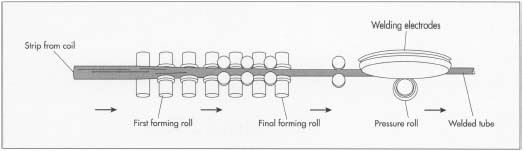
8 Both skelp and billets are used to make pipes. Skelp is made into welded pipe. It is first placed on an unwinding machine. As the spool of steel is unwound, it is heated. The steel is then passed through a series of grooved rollers. As it passes by, the rollers cause the edges of the skelp to curl together. This forms an unwelded pipe.
9 The steel next passes by welding electrodes. These devices seal the two ends of the pipe together. The welded seam is then passed through a high pressure roller which helps create a tight weld. The pipe is then cut to a desired length and stacked for further processing. Welded steel pipe is a continuous process and depending on the size of the pipe, it can be made as fast as 1,100 ft (335.3 m) per minute.
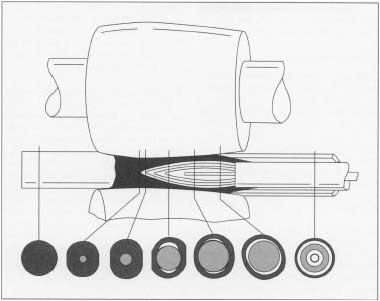
10 כאשר יש צורך בצינור חלק, משתמשים בילטים מרובעים לייצור. הם מחוממים ומעוצבים ליצירת צורת גליל, המכונה גם עגולה. לאחר מכן מכניסים את הסיבוב לתנור בו הוא מחומם לבן - חם. הסיבוב המחומם מגולגל ואז בלחץ גדול. גלגול בלחץ גבוה זה גורם לשרשרת נמתחת ולנוצר חור במרכז. מכיוון שחור זה מעוצב בצורה לא סדירה, נקודת פירסינג בצורת כדור נדחפת דרך אמצע השלט בזמן שהוא מתגלגל. לאחר שלב הפירסינג, הצינור עדיין עשוי להיות בעובי ובצורה לא סדירים. כדי לתקן זאת הוא מועבר דרך סדרה נוספת של טחנות מתגלגלות.
עיבוד סופי
11 After either type of pipe is made, they may be put through a straightening machine. They may also be fitted with joints so two or more pieces of pipe can be connected. The most common type of joint for pipes with smaller diameters is threading—tight grooves that are cut into the end of the pipe. The pipes are also sent through a measuring machine. This information along with other quality control data is automatically stenciled on the pipe. The pipe is then sprayed with a light coating of protective oil. Most pipe is typically treated to prevent it from rusting. This is done by galvanizing it or giving it a coating of zinc. Depending on the use of the pipe, other paints or coatings may be used.


